


How Project Managers Select the Best Project Team
A Guide to Selecting the Right Team Members

Projects are a team effort. Poor teamwork is therefore a common reason for their failure. For this reason, it makes sense to carefully select the members of the project team before the project even begins, rather than simply choosing the employees who happen to be available at that moment to work on the project. You should take a systematic approach when selecting the best employees.
3 steps to the optimal project team
1. Analyse the requirements
If you, as a project manager, are planning a new project and want to put together the best possible team for it, you can only succeed if you know exactly what you expect from each member of your team. Therefore, analyze your project and identify the steps, tasks, and activities that must be completed for it to be successful. Based on your project plan, define the skills and knowledge required to carry out the project. These can vary widely:
- Technical Expertise: Technical expertise refers to the specialized knowledge and skills related to the project’s objectives. To successfully implement a project, at least one team member must possess all the necessary technical expertise. Often, the greatest emphasis is placed on technical expertise. However, to ensure a project runs as smoothly as possible, you should also take other competencies into account.
- Methodological Competence: This refers to knowledge of the methods you need to carry out the project. For example, if you want to manage the project using an agile approach, employees should ideally have experience in agile project management and not just be familiar with traditional project management methods.
- Personal competence: Personal competence is the ability to critically examine oneself in terms of self-management, organisational and learning skills.
- Social Skills: These are the skills involved in interacting with other team members that enable collaboration based on trust, respect, and recognition. This includes, for example, communication skills, the ability to take on responsibility, and the ability to resolve conflicts. Even if this may not seem very important at first glance, you should always take social skills into account to ensure optimal team collaboration.
Time constraints and the project budget also influence the selection of team members. Therefore, you should be clear about the time and budget available for your project.
In particular, for internal projects that involve multiple stakeholder groups within your company, it is also advisable to include all stakeholder groups in your team. This will help you increase acceptance of your project within the company.
The following questions should be of central importance in this phase:
- Which skills are required for which tasks?
- To what extent should an employee master these skills?
- When do these tasks arise?
- How many employees with these skills are needed, and what capacity should they have?
2. Select team members
Once you know exactly which skills and stakeholder groups are needed for your project, you can assemble the right team based on your requirements profile. To do this, you should first compare the required skills with those of the employees in your company. Many companies already have systems in place where employees’ skills are documented using relevant catalogs and self-assessments. If no such system exists, you’ll have to rely on your own experience or that of the relevant supervisors to evaluate employees. If you are still unsure about a potential team member, you can have a conversation with them to clarify your questions and gain an understanding of that employee’s skills and mindset. However, you may also find that some required competencies cannot be covered by your current employees. In this case, you should check whether there is sufficient budget available to bring in external staff.
In any case, consider personal factors when selecting your team members: If individual team members do not harmonise well with others, optimal cooperation is not possible and this can jeopardise the success of your project.
Also check the availability and capacity of potential team members. In addition to their workload from other commitments, you should also factor in planned vacation days during the project period, for example. Furthermore, whenever possible, you should always allow for a buffer in case an employee is unexpectedly unavailable.
Weigh all the factors against one another to create a list of potential team members who are suitable for your project. If you need employees from other departments for your project team, you should also make sure to always identify two potential team members to meet your requirements. This is important because you’ll first need to speak with the respective team or department leaders to see if they’ll agree to have their employees join your team. If your preferred candidate isn’t available, this approach allows you to fall back on another employee.
In this phase, clarify the following questions to determine the optimal team:
- Which internal employees have the necessary skills?
- Which employees have the necessary capacity available?
- Is it possible to hire external staff? Or how can we acquire the missing skills?
- Do the tasks match the potential of the selected employee, and does he or she fit in with the rest of the team?
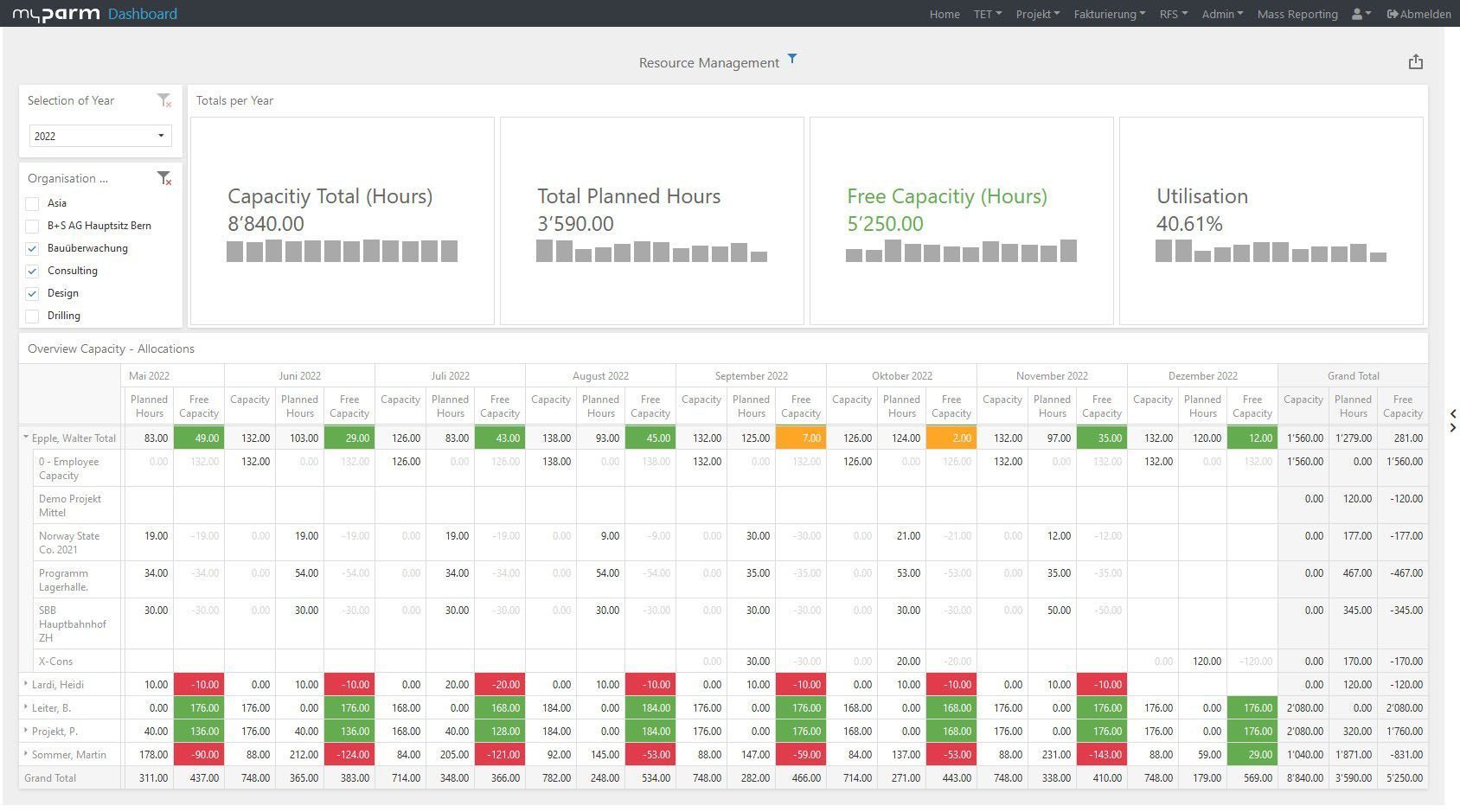
Project management software with built-in resource management can help you match employees with their skills and availability. This not only helps you identify the required skills, roles, or employees, but also provides an overview of capacity and potential bottlenecks.
Real-world example:
Identify employees with the necessary skills and experience.
In addition to the information from a skills management system, project management software can also assist you by analyzing project history. For example, this allows you to determine which employees worked on which projects, in which roles and functions, and during which time periods.
Application-based, easy checking of available capacity.
A resource management system integrated into the project management software provides a real-time view of available capacity at any time. This allows you—at least as a first step—to check the generally available capacity at the division/department level, at the team (resource group) level, or at the employee level.
3. Assigning Staff
If you know exactly which employees would be the best fit for your team, you should contact Human Resources or the respective supervisors to clarify whether the desired employees can be made available for your project. Once all employees have been assigned according to your preferences, it’s a good idea to double-check whether your final project team actually has all the necessary skills to successfully complete your project and whether there could be potential conflicts among the individual members of your team. This way, you can avoid contentious situations and potential problems right from the start.
Conclusion
A skilled and dedicated project team is crucial to the successful implementation of your project. To ensure that all team members work together effectively, you should take the time to carefully select your team. This way, each team member can contribute their unique skills to help achieve your project goals.
More about the project management software myPARM:
Would you like to learn more about myPARM in a demo presentation?
Then schedule an appointment with us today!