

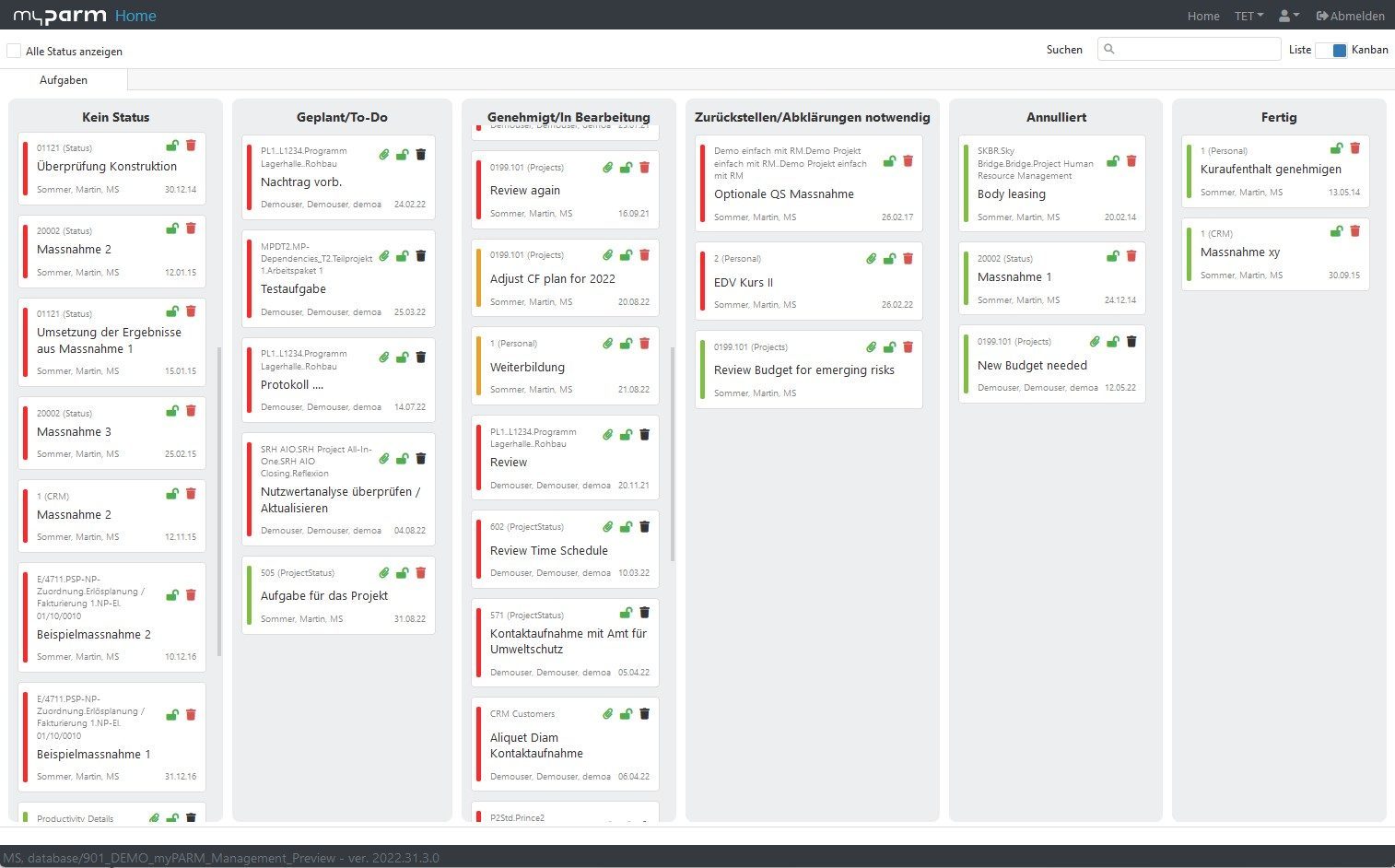
Organizing tasks is easy
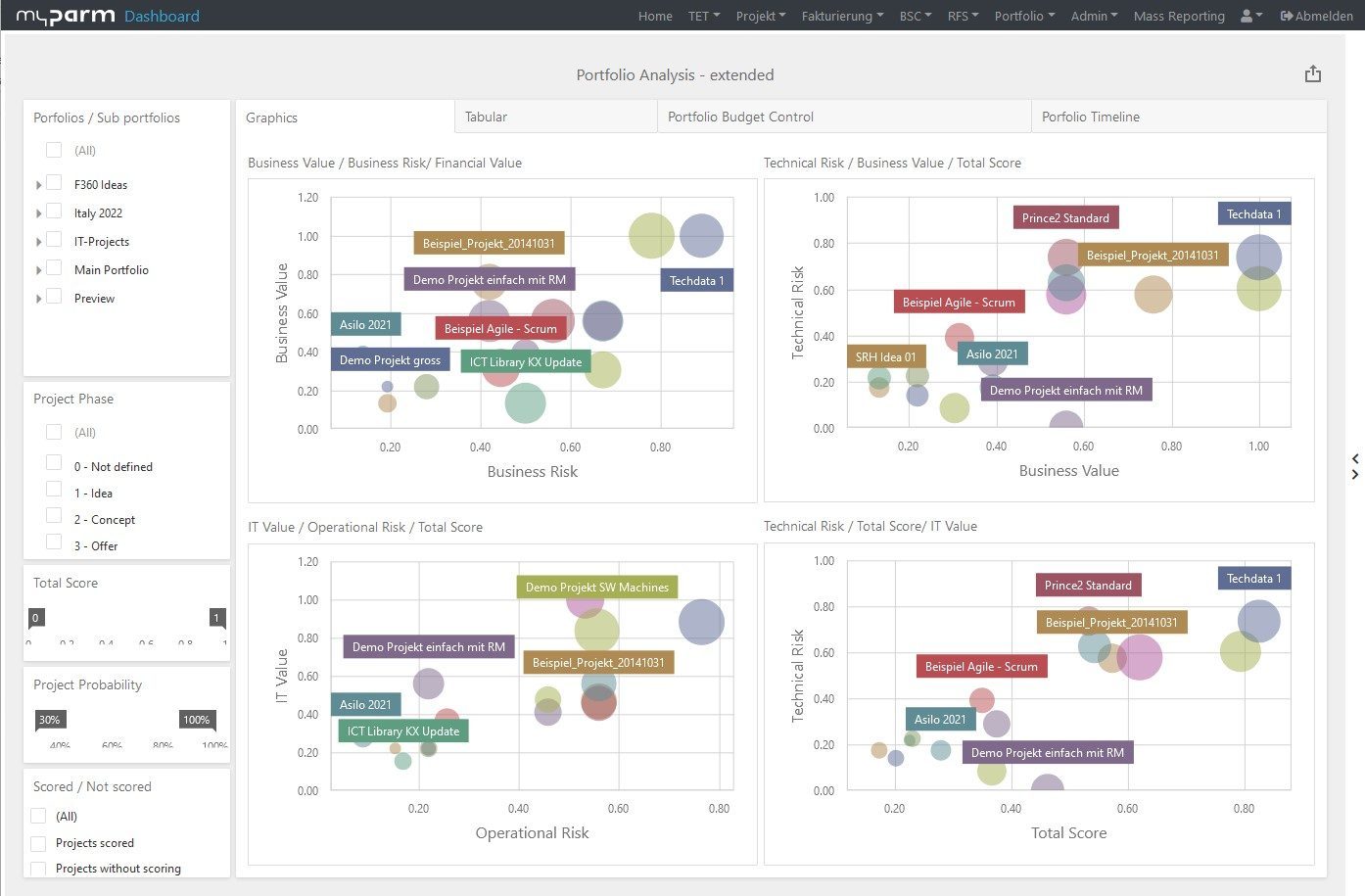
Managing portfolios requires more
Portfolio management and monitoring of KPIs
natively integrated
Finances & budget planning
On-Board
Auditable processes
and rights management












Asana - strong in teamwork, limited in control
Asana is a widely used tool for collaborative task and project management. The clear user interface and focus on teamwork make Asana particularly attractive for operational teams that want to plan, prioritize and work on tasks together.
However, Asana is not designed for complex project landscapes with multiple programs, dependencies, budget responsibility and governance requirements. Structured program management, robust KPI systems or audit-proof processes are not part of the core system and can only be mapped to a limited extent or using additional tools.
Financial planning, funding management or change and addendum management are completely absent. Monitoring and evaluation is limited to simple dashboards without an overarching impact or milestone logic. Auditability, data validation and formalized approvals are also rudimentary, which poses a clear risk for regulated or public environments.


What does myPARM offer as an alternative to Asana?
While Asana is focused on lightweight task management, myPARM is specifically designed for complex programs, portfolios and public organizations. At the same time, myPARM also includes all the features of Asana for simple, streamlined and intuitive task management that can be used both internally and optionally with external stakeholders.
Organizations that switch from Asana to myPARM win:
Structured programs, portfolios and linked projects
Integrated cost, budget and funding planning
Monitoring & evaluation with KPIs, milestones and early warning indicators
Workflow-based approvals, control processes and escalations
Governance mechanisms such as validations, audit trails and data consistency
Anyone using Asana as a project management tool today can easily switch to myPARM: Data can be transferred in a structured way, workflows are mapped cleanly and complex portfolios immediately gain clarity and controllability.
Would you like to take a look at the software?
Compare both options and decide for yourself
| Criteria | myPARM ProjectManagement | Asana |
| Technology architecture | Modular 3-tier enterprise-class architecture; can be used as SaaS, on-premise or hybrid; middleware and REST/OpenAPI interfaces | Pure cloud architecture (SaaS); REST APIs and webhooks; no on-premise deployment; limited middleware capabilities |
| Project and program management | Comprehensive support for multiple projects with portfolio-level KPIs, phase control, Gantt logic and dependency trees | Task/project-based model; portfolios available in premium plans, but with limited structural hierarchy or dependencies |
| Monitoring and evaluation | Integrated monitoring and evaluation framework with real-time KPIs, risk matrices, milestone tracking and variance analysis | Dashboards provide visual insights per project; no integrated M&E structure or cross-project evaluation logic |
| Workflow automation | Robust rules-based automation engine with approval chains, alerts and governance policy enforcement | Asana rules allow for simple IF-THEN automation (e.g. assign, move, tag); lacks advanced escalation or condition branching |
| Financial forecasts and receivables | Native budgeting, cost categories, invoicing workflows and ERP integrations (e.g. SAP) | No financial module; budgeting requires integration with external tools such as Harvest or QuickBooks |
| Ease of use and user interface | Role-specific dashboards, multilingual user interface, form-based input and structure suitable for regulated environments | Clear, modern user interface with focus on team collaboration; limited configurability for corporate governance |
| Reporting and dashboards | Advanced reporting engine with exportable dashboards to PDF/Word/Excel; supports scheduled delivery and cross-project views | Custom dashboards with widgets; CSV exports available; limited to visual task/project metrics |
| Data quality and governance | Centralized data model with validation rules, template locking, full audit trails and governance at API level | Recording of task and comment history; no field validation or system-wide enforcement of data quality |
| Scalability | Unlimited number of users, resources, projects and project portfolios; scalable via SaaS or local deployment; cluster-capable architecture | Suitable for teams with up to several thousand users; horizontal scaling in the cloud; no control over the hosting architecture |
| Security and compliance | Microsoft Entra ID, SSO, HTTPS, VPN, detailed access rights, GDPR-compliant, ISO-compliant, choice of data center | SSO (SAML), MFA, data encryption at rest; only hosted in the cloud (AWS); data protection compliance (GDPR, SOC2) limited to Asana's conditions |
Why myPARM ProjectManagement?

Specially developed for public sector & complex program structures
myPARM is specifically designed to meet the requirements of complex programs with portfolios, linked projects, clear phase models and a scalable structure.

Strategic orientation, assurance & compliance firmly integrated
KPIs, milestones, status logics, audit trails and audit trails enable end-to-end tracking of progress, impact and compliance.

A central, secure platform instead of tables & tool silos
myPARM replaces isolated solutions and loosely integrated tools with a centralized system with a clear data structure, access controls, validations and high data security.

Fully configurable for conveyor models, outputs & rollers
Whether financing logics, output tracking, milestones or differentiated stakeholder roles, myPARM can be adapted precisely to your technical framework conditions without individual development.

Reliable solution with SLAs and long-term support
myPARM is provided with guaranteed service levels, regular updates and professional support, optionally as a SaaS, on-premises or hybrid solution.
FAQ
For which use cases is Asana particularly well-suited?
Asana is particularly well-suited for organizing tasks, facilitating teamwork, and coordinating manageable projects. Teams can create, prioritize, track, and collaborate on tasks. Thanks to its intuitive user interface, users can usually get started quickly, which is why Asana is especially popular among marketing, communications, and operations teams.
When does Asana reach its limits in project management?
As project complexity increases, so do the demands on resource planning, budget management, governance, and cross-project reporting. In such situations, traditional task lists and dashboards are often no longer sufficient. Companies then need additional capabilities to centrally manage programs, portfolios, dependencies, and strategic metrics.
What are the main differences between Asana and myPARM?
Asana focuses primarily on task management and team collaboration. myPARM expands on this approach by adding features for multiprojekt management, portfolio management, financial planning, resource management, and project controlling. This enables companies not only to organize individual projects but also to plan, monitor, and manage their entire project landscape on a single, centralized platform.
Can Asana be used for multi-project and portfolio management?
In principle, several projects can also be managed in Asana. However, as soon as cross-project dependencies, shared resources, budget responsibility, or strategic prioritization need to be taken into account, the organizational effort increases significantly. Specialized solutions offer centralized portfolio views, key performance indicator systems, and control mechanisms for this purpose.
What advantages does myPARM offer for complex project environments?
myPARM was developed specifically for organizations that manage multiple projects, programs, or portfolios simultaneously. In addition to project management features, it also offers tools for resource planning, financial management, reporting, risk management, and governance. This creates a unified data foundation for both operational and strategic decisions.
Why are companies looking for alternatives to Asana?
Many companies start using Asana because the software offers simple and user-friendly task management. However, as a company grows, it often faces requirements for budget planning, compliance, auditability, portfolio management, and management reporting. In these cases, companies look for solutions that already provide these features out of the box, rather than having to supplement them with additional tools.
Is switching from Asana to professional project management software a lot of work?
The effort involved depends on the existing system landscape and the processes in use. In many cases, projects, tasks, and structures can be adopted in stages. At the same time, the transition offers the opportunity to standardize existing processes, establish reporting structures, and put project management on a scalable footing.