
Conflicts in the project? How to make the best of it!
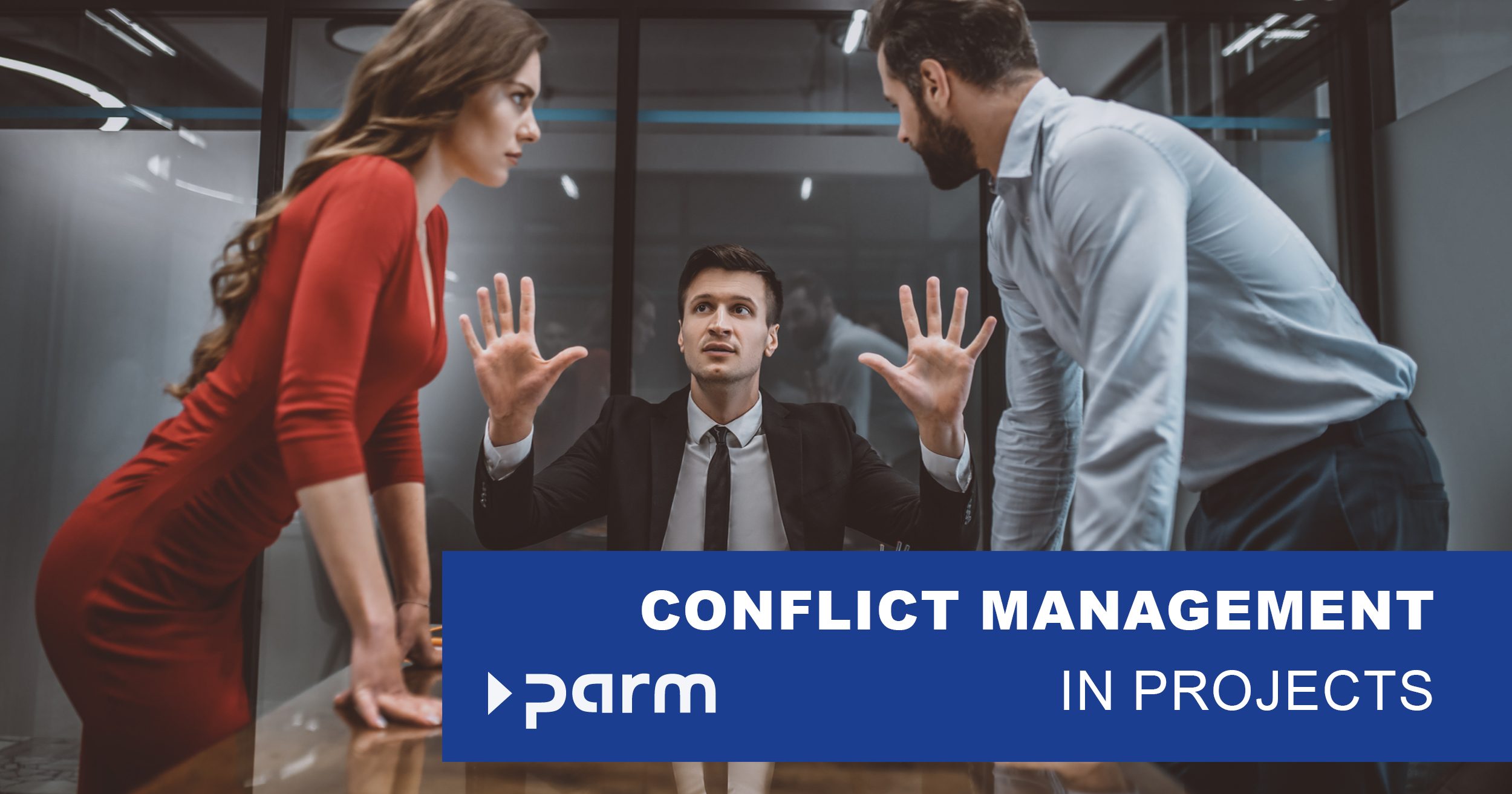
Conflicts are like the obligatory coffee in the office on a Monday morning - hardly any project runs without them. Regardless of whether colleagues disagree, a deadline seems unattainable or the client's wishes seem like cloud cuckoo land: conflicts are part of the game. And as annoying as it is, it can also bring some advantages. Because without friction, there is no development. We take a look at the most important aspects of conflict management in projects and shed light on how to turn these unavoidable hurdles into productive results.
What is conflict management?
When people work together, different expectations, working styles and personalities come together. Conflicts are therefore unavoidable, especially in stressful day-to-day project work. There are many possible areas of conflict: between team members, between different departments, or between the project team and the client. Conflict management deals with recognizing, understanding, managing or resolving and preventing these conflicts at an early stage. While conflicts initially have a negative impact on project work, they are not just useless disruptive factors. Rather, they also offer opportunities, for example to discover innovation potential or uncover hidden problems that would otherwise remain in the background. A conflict is often like an early warning system: it signals that something in the project is not running optimally. Conflicts could therefore be seen as a kind of "construction site" in the project - not always pleasant, but sometimes necessary in order to achieve better results in the long term. If a team approaches conflicts constructively, they can lead to real improvement.
Recognizing and Understanding Conflicts
If you want to deal with conflicts effectively, you must first recognize and understand them. Often, you can intuitively recognize simmering conflicts based on a few telltale signs:
- The project team or individual employees no longer speak openly with one another or go out of their way to avoid each other.
- Information is being withheld.
- Employees suddenly show a lack of interest in certain topics, and may even display signs of resignation, withdrawal, working strictly by the book, or take more frequent sick days
- The error rate is rising, and deadlines are no longer being met
- Arguments or aggression within the team, accusations, unfriendliness, and sarcastic remarks are becoming more frequent
If a project manager observes one or more of the signs mentioned, swift action is required, because the earlier a conflict is identified, the greater the chance of minimizing its negative effects.
The next step is to understand the causes of the conflict. To do this, it’s helpful to have open discussions with the opposing parties to gain the best possible understanding of each side’s position. This will help you easily identify the nature of the conflict:
- Factual conflicts: Factual conflicts are often caused by differing opinions or views on a matter, a lack of clear objectives or a project manager who is reluctant to make decisions. When time, budget or personnel are scarce, such tensions grow like weeds, especially when project employees are heavily involved in the project alongside their line function. Disagreements, for example about the prioritization of the respective tasks or about the technical approach, often occur in such a context.
- Role conflicts: In a project team, each employee should take on a specific role and thus fulfill defined tasks. However, if it is not clear exactly who is responsible for what, disputes and even competition often arise. But even with defined roles, disputes can arise. This is often because expectations are automatically placed on certain roles. If these expectations are not met because the holder of the role understands their role differently, conflicts arise.
- Communication Conflicts: Minor misunderstandings in communication can quickly escalate into major conflicts if they are not resolved immediately. Resistance from team members—for example, because they were not included in important decision-making processes—is also a form of communication conflict. A lack of rules regarding communication can also cause such conflicts.
Strategies for dealing with conflicts
There are various conflict management strategies that can be used depending on the nature and severity of the conflict:
- Prevention: Some conflicts are minor enough that they can be ignored at first. Since minor conflicts can sometimes escalate when addressed, but may occasionally resolve themselves over time or as the project progresses naturally, it’s important to handle them with tact. But be careful: If minor conflicts are ignored for too long, they can build up and escalate at a later stage.
Advantage: Minimal effort and time savings when dealing with minor conflicts.
Disadvantage: Postponed conflicts can lead to greater resentment in the long run. - Concede (adaptation): This strategy is suitable when it is more important to keep the peace or when the issue of the conflict is of secondary importance to one party. In such cases, one party can adapt to the other and refrain from asserting their own interests.
Advantage: Can strengthen harmony in the team and improve the relationship of trust.
Disadvantage: If the same person always gives in, it can lead to frustration and an imbalance. - Finding a compromise: In a compromise, both parties to the conflict make concessions in order to reach a joint solution. This strategy is often pragmatic and effective if the goal is a quick, fair solution. Although each side does not gain everything it wants, neither does it lose the conflict completely.
Advantage: Both sides gain something and the conflict is often resolved quickly.
Disadvantage: Can lead to superficial solutions that do not fully address the problem, as neither side is completely satisfied. - Cooperate (win-win strategy): The cooperative strategy aims to find a solution that is beneficial for all parties involved. Both parties actively work together to disclose their needs and wishes and find a creative solution that is satisfactory for all parties. Cooperation is time-consuming, but is the most sustainable strategy for finding lasting solutions.
Advantage: Often leads to long-term viable solutions and promotes mutual trust.
Disadvantage: Requires time, patience and the willingness of both parties to deal with the problem.
Our tip: If project managers notice that interpersonal or substantive conflicts are escalating or being swept under the rug—which negatively impacts the project—it can be helpful for the project manager to facilitate the conflict and thereby achieve a win-win situation. This means that the manager or an external mediator, with a great deal of tact, helps the team separate the relational and substantive aspects of the conflict and thus reach an agreement. - Escalation: Often, referring a decision to the next higher level has a very negative effect. This is especially true when communication between two parties has broken down and matters are now handled only through their respective superiors. However, particularly in project management, there are many situations that cannot be resolved within the project itself. A lack of personnel, an insufficient budget, or the need to reassign staff to special project assignments often require intervention from the next higher authority.
Advantage: Can be used to resolve conflicts that the project team cannot resolve on its own.
Disadvantage: It can quickly come across as “tattling” to your supervisor, and your supervisor may also view being drawn into a conflict negatively.
General tips for dealing with and preventing conflicts
"You can't not communicate," said Paul Watzlawick. Communication is the decisive factor for success, especially in conflict management. An open and respectful approach, in which the team actively listens and shows understanding, creates the basis for preventing or resolving conflicts before they escalate. As this can be difficult due to the different characters and stress in projects, here are some tips on how conflicts can be prevented or mitigated.
- Stay calm and objective: Emotions can quickly boil over in conflict situations. However, this often leads to intensified conflicts. Therefore, try to remain calm and objective at all times.
- Make room for empathy: Even the most difficult colleague has their reasons for acting the way they do. Listening or asking friendly questions can often work wonders.
- Set boundaries: When things get difficult, it's important to be clear about what's okay and what's not. In such cases, set clear boundaries politely but firmly.
- Active listening: Paying attention and asking questions can help to avoid misunderstandings.
- I-messages instead of you-messages: If a conflict has already arisen, it can quickly lead to both parties blaming each other. Instead of blaming others, it helps if the opposing parties use "I" messages and explain how they feel or how they perceived a situation.
- Regular feedback sessions: Regular feedback sessions not only allow conflicts to be addressed directly and thus resolved quickly. More importantly, such sessions can also help identify potential conflicts early on, thereby preventing them from arising.
- Create clarity and structure: Conflicts often arise due to a lack of clarification of roles, unclear objectives or poor communication. Creating structure and clarity can have a preventative effect and often defuse conflicts before they escalate. Clear rules and expectations help to avoid misunderstandings.
Conclusion
Conflict management is no easy task, and there is rarely a “perfect” solution. However, with the right strategies, a little patience, and good communication, many conflicts can be defused—often to the point where the project and the team emerge stronger as a result.
Effective project management software such as myPARM ProjectManagement can provide crucial support in identifying conflicts at an early stage and tackling them in a structured manner. With functions such as transparent task tracking, clear assignment of responsibilities and comprehensive communication tools, myPARM provides a clear overview and promotes an open exchange - important elements for conflict avoidance and resolution. By integrating feedback and reporting tools, potential sources of conflict, such as overloads or unfulfilled expectations, can be quickly identified. In this way, myPARM ProjectManagement not only helps to resolve conflicts, but also to strengthen collaboration and efficiency within the team in the long term.
Find out more about the myPARM project and portfolio management software:
Would you like to get to know myPARM in a demo? Then make an appointment with us right away!