
Cloud-based, web-based or as Software-as-a-Service (SaaS) - all the same, isn't it?
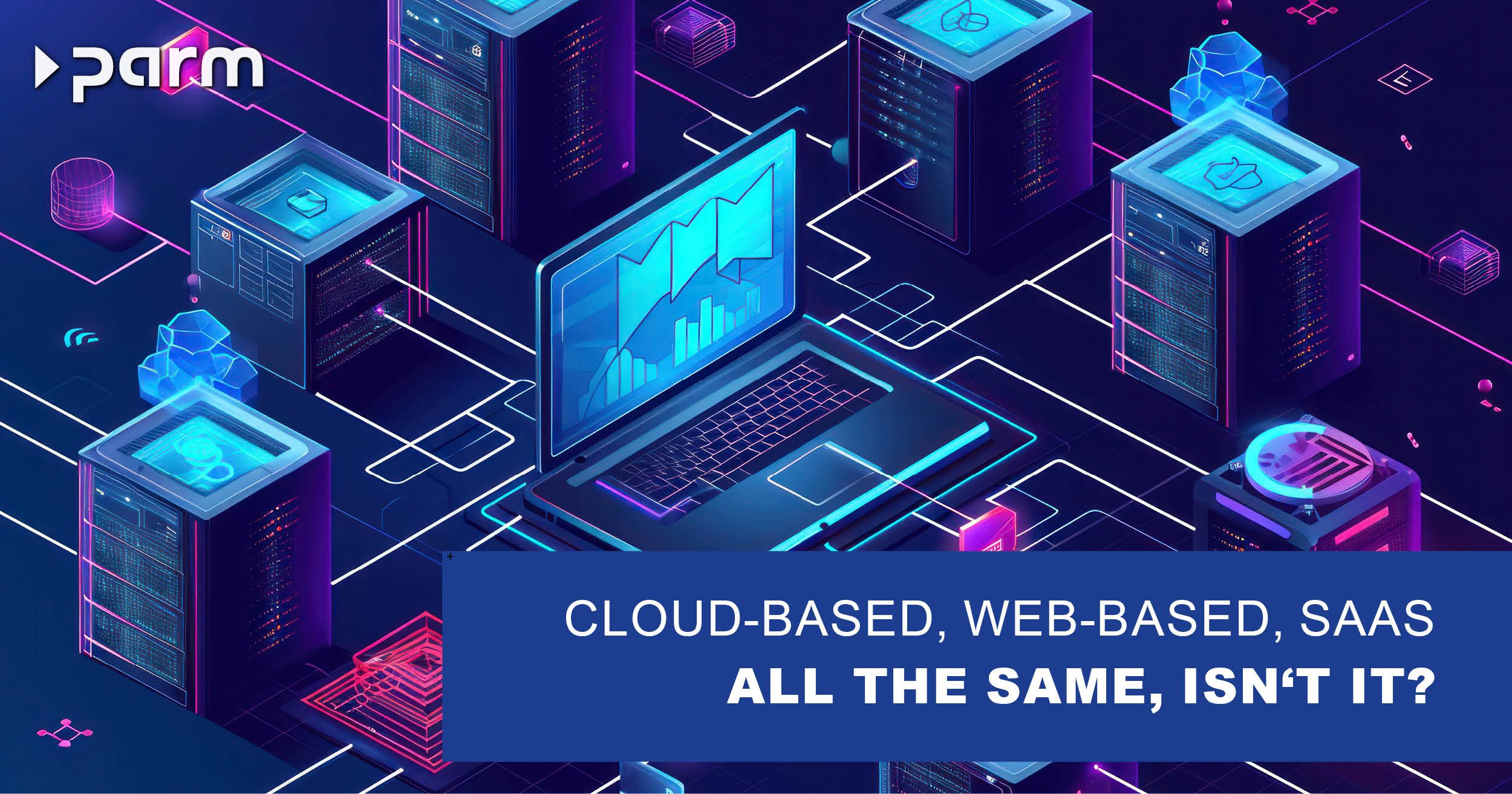
Modern software, such as that offered by Parm AG, is often cloud-based, web-based, or available as Software-as-a-Service (SaaS). But aren’t these three different terms that all describe the same thing? No! We’ll explain the differences and why it’s important to understand them.
What are cloud-based, web-based and SaaS?
In fact, there is some overlap between the terms “cloud-based,” “web-based,” and “SaaS,” which is why they are often used interchangeably. However, this isn’t entirely accurate and can lead to misunderstandings, for example, when purchasing software. So let’s take a closer look at what these three terms mean:
- Cloud-based: A cloud-based system means that resources (such as computing power, storage, applications, etc.) are provided via the Internet—more specifically, via a cloud. These resources are typically managed by third-party providers and can thus be hosted on remote servers that are accessed via the Internet. Cloud-based systems generally offer high scalability and flexibility, as well as the ability to access them from anywhere without having to provide or maintain your own hardware.
- Web-based: A web-based system is an application or piece of software accessed via a web browser. This means that the entire user interface and functionality are provided through the browser, eliminating the need for local installation or downloads. Web-based systems can be hosted both locally (for example, on a company server) and in the cloud. They offer universal access across a wide variety of devices and operating systems, since only a browser—and possibly an internet connection—is required to access the application.
- SaaS (Software-as-a-Service): SaaS is a specific type of software delivery via the Internet. With SaaS applications, the software is hosted centrally and made available via the Internet. This means users can access the software via the Internet without having to install it locally. SaaS applications are typically offered through a subscription model, in which users pay to use the software rather than purchasing it.
The similarities
So, although cloud-based, web-based, and SaaS are different concepts, there are certain areas where these terms overlap and mean that the terms are often used interchangeably:
- Internet-based delivery: All three concepts involve the delivery of resources or services via the Internet. Cloud-based services use the Internet to provide various types of resources, such as computing power and storage. Web-based applications offer their functionality via the Web without requiring a local installation. SaaS applications are also delivered via the Internet and can be subscribed to by users through a web browser.
- Abstraction of hardware and infrastructure: With all three concepts, users do not have to worry about the physical provision or maintenance of hardware, servers, and infrastructure, as these tasks are usually taken over by the provider.
- Scalability and Flexibility: All three approaches offer scalability and flexibility. Cloud-based services allow users to scale resources as needed. Web-based applications can be accessed by users across various devices and operating systems. SaaS applications offer a flexible subscription structure that allows users to adjust their usage according to their needs.
- Access from anywhere: Another area of overlap is universal access from anywhere. Users can access cloud-based services, web-based applications, and SaaS applications from any location with an Internet connection. This enables users to work remotely and access their data and applications from various locations.
The subtle differences
The differences between the three terms lie in the details. For example, you can generally assume that access to an application in cloud-based systems always occurs via an Internet connection. However, this is not necessarily the case for web-based software, even though the term might suggest it. One example of this is the project management software myPARM. It is web-based, which means you can access and use it through your browser. However, this does not necessarily mean the software is hosted in the cloud. Rather, it can also be hosted on-premises—that is, on your company’s own servers. In such a case, you may be able to use the software without an internet connection.
Umgekehrt ist eine Cloud-basierte Software nicht zwangsläufig webbasiert, auch wenn dies ebenfalls naheliegt. So sind Apps, die sie beispielsweise auf Ihrem Smartphone nutzen, meist Cloud-basiert. Da sich diese Dienste aber nur mit der App, und nicht über einen Browser nutzen lassen, sind sie jedoch nicht gleichzeitig webbasiert.
SaaS, on the other hand, is—to put it simply—just a subscription to a software service. It does not require a cloud-based or web-based application. Thus, even a local installation for which you pay a monthly or annual fee is considered Software-as-a-Service. An example of this is software like Microsoft Office 365, which you can subscribe to and then either install locally on your computer or use via the web.
Conclusion
Cloud-based, web-based, and SaaS solutions play a crucial role in the delivery of services and applications. While cloud-based services provide resources such as computing power and storage via the Internet, web-based applications enable universal access across various devices. SaaS applications offer a flexible subscription model for accessing software via the Internet without the need for local installations. The diversity of these technologies helps provide businesses and users with innovative solutions tailored to their specific needs.
Parm AG's web-based software offers a versatile and flexible solution that can be deployed—depending on customer needs—either in a cloud environment, hosted on-premises, or as a SaaS offering. This flexibility allows companies to use the software according to their preferences and requirements—such as those related to data protection—while still benefiting from the advantages of web-based deployment. With its web-based architecture, Parm AG’s software ensures that users can access their data and applications from anywhere, while also allowing the software to be operated in various environments to meet customers’ individual needs.
Find out more about the myPARM project and portfolio management software:
Would you like to get to know myPARM in a demo? Then make an appointment with us right away!