

Procurement Intelligence
How to Optimize Your Procurement with Business Intelligence
Purchasing plays a central role in the success of manufacturing companies and, in many cases, offers significant potential for improvement. For example, this allows companies to realize cost savings, improve the supply chain, and ensure smooth production. To achieve this, it is important that buyers can make smart, data-driven decisions even in a changing environment and maintain control over demand and spending at all times.
What is Procurement Intelligence?
Purchasers are responsible for ensuring that the right products, of the right quality, are available at the right time. To achieve this, they must analyze material requirements and goods, as well as conduct supplier evaluations. In addition, goods prices should be as low as possible to keep costs down.
In this context, the purchasing department is caught between a rock and a hard place: On the one hand, goods must be available when they are needed within the company to prevent production delays. This means that dynamically changing demand must be met at all times. On the other hand, however, the company should not purchase too many goods, which would clog up the warehouse and tie up important capital. At the same time, as accurate purchase figures and forecasts as possible are essential for price negotiations with suppliers. Keeping all of this in mind simultaneously and finding an optimal solution is a major challenge. Efficient procurement controlling is therefore essential for the company’s success.
Procurement Intelligence, Purchasing Intelligence, or Supply Chain Intelligence uses data analysis to help you not only maintain an overview but also find optimal solutions at all times. Procurement Intelligence helps you streamline traditional purchasing activities, simplifies expenditure analysis and demand forecasting, and supports supplier relationships and price negotiations. Procurement Intelligence visualizes, analyzes, and monitors all key data, processes, and metrics in procurement. This gives you a transparent overview of prices, developments, and trends, as well as volume structures, purchasing volumes, processes, and suppliers.
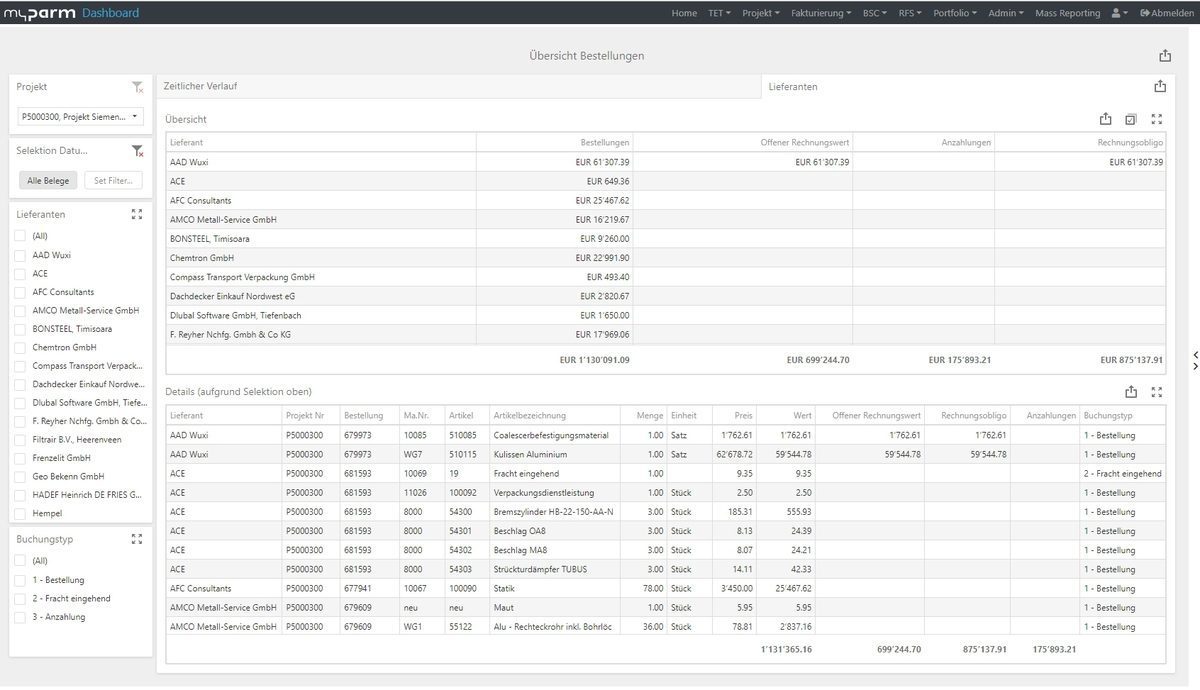
Procurement Intelligence helps in these areas:
- Data Access: Many companies have data stored in different systems or, for example, in Excel spreadsheets. However, without a holistic view, it is difficult to perform meaningful data analysis. BI software allows you to consolidate this scattered data in a single location and analyze it. This way, you always have a clear overview of all key information, such as billing units, price variances, supplier and buyer information, target prices, or tax-related information. In addition, you can generate automatic reports and set up early warning indicators.
- Processes: With BI software, you can analyze your purchasing processes in detail and identify opportunities for optimization. At the same time, the clear data and rapid analyses allow you to streamline processes and accelerate decision-making.
- Cost planning, budget-to-actual variances, expense control: BI dashboards help you plan your expenses and keep track of them at all times. This allows you to compare planned costs with actual costs and identify variances. A BI system also allows for a detailed breakdown of costs.
- Risk Management: Data analysis can also help identify risks and take measures to address them. These risks may include, for example, pricing and compliance risks, as well as geographic risks.
- Contract Management: Contract negotiations should always be based on sound data. BI software helps you with this by providing all the necessary data at a glance—such as demand forecasts, price comparisons, or risks. At the same time, the system allows you to view and analyze contract data on a single platform.
- Supplier Evaluations: Using a scoring model, you can evaluate suppliers and take into account various aspects—such as on-time delivery, product quality, services, and costs—while presenting the results in a visually appealing way. This enables you to compare different suppliers to find the best ones for your needs. It also allows you to identify the opportunities and risks associated with each supplier, so you can address emerging issues early on and negotiate favorable terms.
- Demand Management and Inventory: A BI system also helps you analyze historical material demand and thus make predictions about future demand trends. This allows you to ensure that the right amount of material is available for production at all times, while keeping your inventory lean. In addition, recurring demand spikes can be identified through analysis, so you’ll be prepared for them in the future. Furthermore, BI systems—for example, through an alert and early-warning system—enable a quick and flexible response to unexpected spikes in demand. Demand analysis also helps you in price and contract negotiations with your suppliers, allowing you to take advantage of cost-saving opportunities.
- Distribution: A BI solution can also help you keep track of the movement of goods within your company or from suppliers. This involves not only moving goods from one location to another, but also details such as proper packaging, quantity, warehousing, and logistics. Real-time monitoring via a BI system helps you track the status at all times. At the same time, BI helps you reduce delivery costs—such as fuel expenses—and identify potential risks.
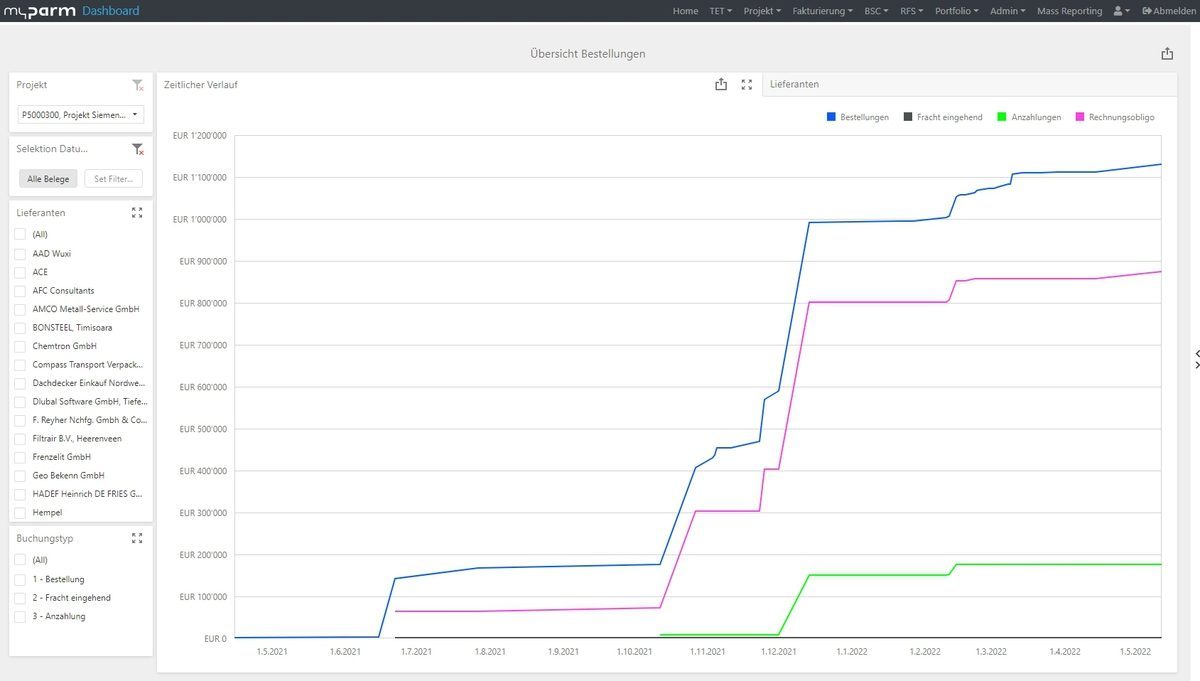
Benefits of BI in Purchasing
- Procurement processes can be analyzed and thereby made more efficient and transparent
- Potential savings are identified, e.g., in process and procurement costs
- Accurate demand planning with demand forecasts
- Critical demand peaks can be quickly identified
- Automated reports
- Selection of optimal suppliers
- Support for contract or price negotiations
Conclusion
Modern companies can use a BI system to optimize their procurement in a wide variety of areas. This allows them not only to negotiate better terms with suppliers, but also to improve processes, forecast demand, and capitalize on cost-saving opportunities.
Would you like to find out how you can analyse the potential for improvement in your purchasing department?
Weitere Informationen über die Business Intelligence Software myPARM BIact:
Möchten Sie myPARM BIact in einer Demonstration kennenlernen? Dann vereinbaren Sie gleich einen Termin!