



Manufacturing Intelligence
From Manufacturing Company to Industry 4.0
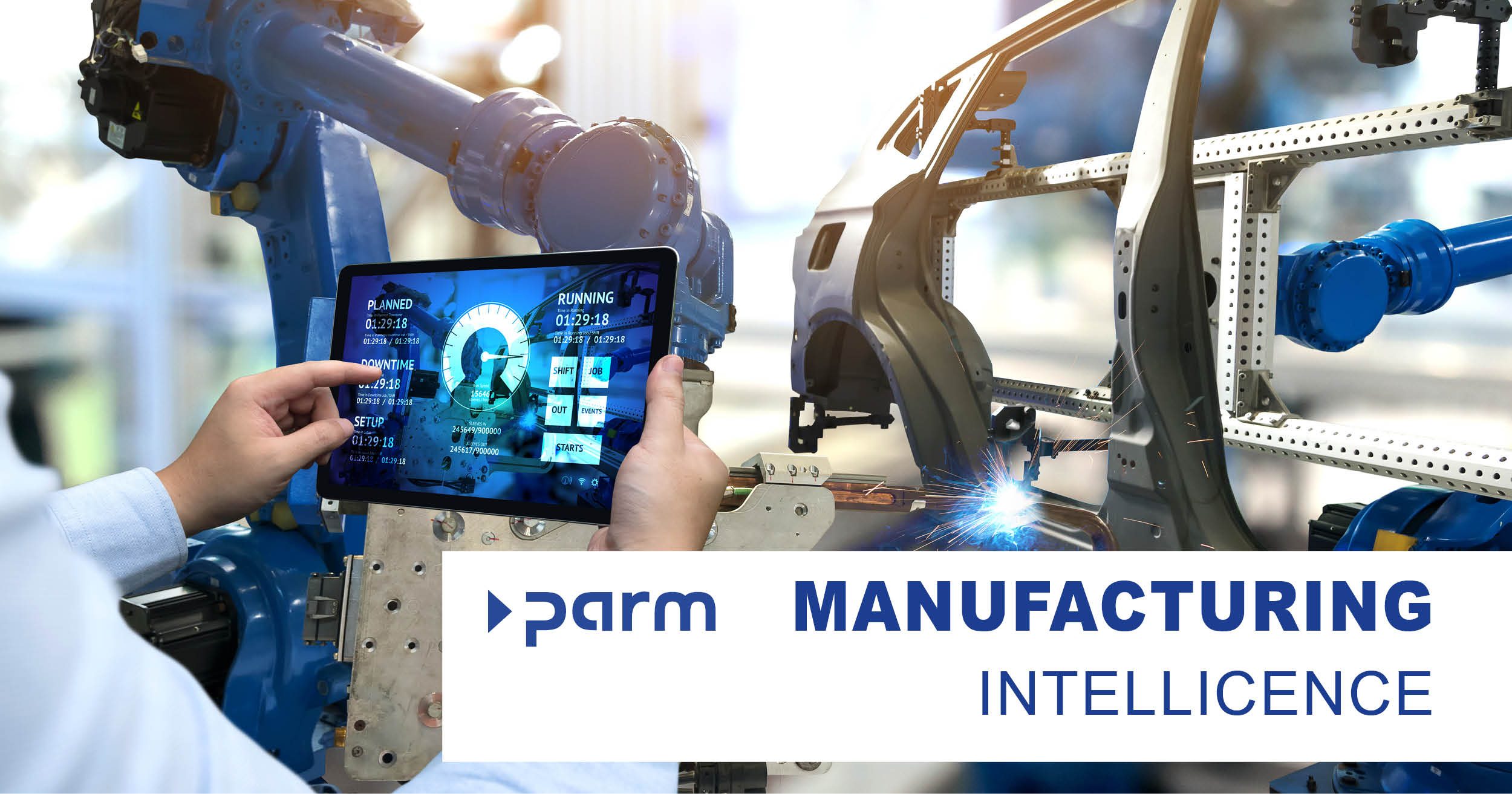
Shorter product life cycles, greater product complexity, global competition, and increased demand for customized products—manufacturing has become an extremely complex area of business, and the challenges grow every year. In this sector, too, companies must constantly adapt to changing market conditions and be able to respond flexibly. This means they must invest in new capabilities, acquire new technologies, and implement new business models. In short: They must become Industry 4.0 companies. One way to achieve this is by using and analyzing the production data they’ve collected and implementing the insights gained from it. However, this is no easy task, especially when data and information are still being collected and analyzed in Excel spreadsheets.
However, the digital transformation is now also influencing production, and it is the key to optimizing production processes, product quality, and resource utilization. Therefore, data-driven production is the order of the day.
What is Manufacturing Intelligence?
The primary goal of manufacturing facilities is to minimize production costs while ensuring the highest possible product quality and the shortest possible production cycle. The operation of production machinery, the supply chain, and logistics must be optimally coordinated to achieve the desired results. To this end, decisions must be based on production data. Business intelligence and data analysis are the essential tools for effectively evaluating production data and identifying opportunities for optimization. The terms “Manufacturing Intelligence” and “Production Analytics” are synonymous with the application of business intelligence in manufacturing.
>>Manufacturing Intelligence describes the collection, consolidation and analysis of production data in order to optimise production processes.<<
How is Manufacturing Intelligence applied?
Manufacturing is one of the areas where the most data is generated and collected. Analyzing this data can help at every stage of your production process—from sourcing raw materials to delivering finished goods.
- Improving Operational Efficiency: By analyzing your production data, you can identify which processes are already running optimally, where downtime occurs, where capacity is underutilized, and, consequently, which processes require changes. Business intelligence software not only generates the necessary reports for you, but also links data from different areas so that you can identify dependencies, weaknesses, and bottlenecks within your processes.
- Increasing Productivity: Tracking the current productivity of a machine, an employee, a team, or an entire department can help you identify opportunities for improvement without compromising product quality. With the right BI solution, you can track individual performance, identify weaknesses, make changes, and verify that they have been successfully implemented.
- Quality Management: In manufacturing companies, quality assurance and quality control are of the utmost importance for remaining competitive. If you already track quality throughout the production cycle and record data on defective products, you can use manufacturing intelligence to analyze this data and correlate it with production data. This allows you to identify weak points during production and improve—or ensure—product quality.
- Managing the Supply Chain: Delays within the supply chain lead to interruptions or delays in production, resulting in losses because finished products are delivered late or production may even come to a halt. Manufacturing Intelligence provides you with key insights into your supply chain data, enabling you to select reliable suppliers and partners or negotiate prices based on that data. You can also use this data to plan your production precisely so that sufficient raw materials are available at all times and products are finished exactly when they are in demand.
- Optimizing Material Usage: Excessive or insufficient material inventories are a major problem for manufacturing companies. To avoid both extremes, business intelligence can be used to determine optimal inventory levels. In addition, you can track your inventory in real time, allowing you to take action at any time—for example, in the event of quality issues.
- Optimize the Value Chain: Reports on resource usage, raw material costs, and production costs help you improve value creation in your production and make the right decisions—whether it involves necessary investments, switching suppliers, or changing production steps. This allows you to increase your company’s ROI.
- Compliance with Regulations: Manufacturing companies must also comply with various legal regulations, such as safety standards designed to protect employees. Business intelligence can be used for process control to verify compliance and make processes safer.
- Decisions in Day-to-Day Operations: Business intelligence reports can also be actively used in day-to-day operations to gain a quick overview of production. The data is easily accessible and easy to understand. This way, it can help inform daily decisions.
However, Manufacturing Intelligence can not only directly support production, but also provide important insights for the management of your company:
- New Product Development: Data from customers or markets provides insights into where existing products can be improved and what new products are in demand. Data from production can also be used in product refinement and new product development to optimize the mass production of new products in advance.
- Make long-term decisions: The data collected from your production can be used to make long-term decisions aligned with your company's goals, allowing you to make the most of your opportunities.
- Proactive Planning: If you want to determine which products should be manufactured and when—as well as, for example, when a machine should undergo maintenance—Manufacturing Intelligence helps you identify the optimal time. This allows you to plan proactively at all times and avoid machine downtime or failures.
- Predict demand: Business Intelligence can help you predict the demand for a product so that you can adjust your production, orders for raw materials or even your budget to the forecast.
- Price Optimization: Analyses that include production costs, for example, allow you to determine exactly how much a finished product should cost. This enables you to tailor your pricing to the specific circumstances of your business.
- Alerts: An automatic alarm in case of exceeding or falling below various target or limit values can help in managing your production, for example, if a defined defect rate is exceeded or if the minimum material stock level is not reached.
Implementation and difficulties
Although manufacturing companies collect large amounts of data, this data is often not correlated with other data or analyzed, as this can be very time-consuming. In addition, it is not uncommon for data to be collected manually in Excel spreadsheets. This unstructured data makes it impossible to draw clear conclusions, identify causal relationships, or tap into the data’s vast potential. However, since most companies already use an ERP system that collects a large portion of the necessary production data, it is easy to implement a business intelligence system that utilizes and analyzes this data. In addition, data from other sources, such as Excel spreadsheets, can be integrated and made available. This allows for the real-time analysis of key metrics such as machine and personnel performance, uptime and downtime, production output, bottlenecks, scrap rates, on-time delivery, and many more.
Conclusion
Manufacturing Intelligence helps you optimize the use of your resources, reduce costs, improve product quality, shorten product cycles, and make the right decisions for the long term. To achieve this, modern companies need business intelligence software that collects all data, correlates it, and enables clear, straightforward analysis. Customizable dashboards provide you with exactly the information you need for your specific area or question at a glance. This helps you make the right decisions at all times. In addition, early-warning systems help you take timely action when problems arise.
Weitere Informationen über die Business Intelligence Software myPARM BIact:
Möchten Sie myPARM BIact in einer Demonstration kennenlernen? Dann vereinbaren Sie gleich einen Termin!