


Project Budget Exceeded—What Now?
Here’s what you can do if it happens—and how to prevent it

Even the best project manager can find themselves in a situation where a project exceeds the planned budget. No matter what the reasons may be, swift action is now required. After all, a budget overrun will not only affect your reputation as a good project manager, but can also negatively impact the productivity, profits, and strategy of your company and its stakeholders.
Why can a project exceed its budget and how can this be prevented?
There are countless reasons why a project can exceed its budget, for example:
- Inaccurate Estimate: If the effort estimate at the start of the project was too optimistic, the budget was set too low. Estimating effort as accurately as possible is a difficult task, especially at the beginning of a project. To learn how you can still succeed in this and thus prevent budget overruns, read the article “Effort Estimation.”
- Scope: The scope of the project has increased, or the project’s objective has changed. This can happen, for example, when your client requests additional features for a project but the budget isn’t adjusted accordingly. Some clients frequently ask for minor changes to the project that can be implemented quickly and easily. But even small changes can quickly add up to a significant expense. Of course, there’s no reason not to implement a minor change without additional budget just to make your client happy. However, this should be a one-time occurrence. If your client requests further changes, the budget should be increased for anything that goes beyond the original scope of the project. If the actual goal of the project has even changed over time, your budget should definitely be adjusted to meet the new requirements. To maintain transparency in the project, we recommend professionally managing changes in scope and the resulting additional costs through change management or change order management.
- External factors: For example, inflation can force your suppliers to raise their prices. This often becomes a problem, especially if your project is very long-term, had to be put on hold for some time, or was costed at a time when prices were very low but are now rising. If you are aware in advance that your project will be very long-term, it is advisable to take this into account when entering into contracts with your suppliers and to include appropriate safeguards.
- Poor Use of Resources: In some cases, you may be using unnecessarily expensive resources for your project, or your resources may simply be unable to work efficiently. This can happen, for example, when project team members have to constantly switch between different projects, preventing them from focusing on any one project. If you keep this in mind during resource planning, you can select the optimal resources for your project. You can also provide your project team with time management methods, such as the Pomodoro Technique, to help them work as efficiently as possible.
- Poor Budget Management: If you don’t keep a tight rein on your existing budget from the start, you may end up spending too much money on less important things or lose track of how much has already been spent. Especially at the beginning of a project, when there’s still plenty of budget left, people tend to pay little attention to costs. However, if you keep a close eye on your budget status and ongoing costs from the very beginning, you’re unlikely to face any unpleasant surprises. Conducting periodic budget reviews is highly recommended.
- Exceeding the Planned Duration: Even if a project takes longer than planned, this will increase costs. Therefore, plan your projects with foresight, consider where difficulties might arise, and conduct a risk analysis. Take steps to mitigate these risks, manage your projects vigilantly, and keep a close eye on their status at all times. This way, you can intervene early if you notice that your project is falling behind schedule.
To learn which metrics can help you determine whether your project is going over budget—and how they can serve as early warning indicators—read the blog post “Earned Value.”
Check the Project Status and Develop an Action Plan
If you discover that your project budget has been exceeded, it’s important to first determine exactly where the problem lies. Only then can you develop an optimal solution moving forward. Once you’ve identified the cause, you should also check whether it affects other areas of the project, such as the project duration, scope, quality, resources, or risks.
With the information you’ve gathered, you can now weigh alternative solutions.
1. Reduce costs:
A first step could be to try to reduce costs. There are several ways to do this:
- Swap resources:
Replace resources with less expensive options. For example, you can replace a highly experienced employee who is underutilized with an employee who has less experience and is therefore less expensive. However, you should keep in mind that the new employee may need time to get up to speed on the new project and may require more time to complete individual tasks. Therefore, you should only make such a change if your project is not time-sensitive. In some cases, however, it may make sense to replace a less experienced employee with a highly experienced one, as the higher level of expertise could save time and, consequently, costs.
The same applies to required materials or services: You can try switching to a more cost-effective option if it does not negatively impact the schedule or quality, or if these factors are less critical. Alternatively, you can switch to more mature materials if doing so allows you to save a sufficient amount of critical project time. - Reduce Unnecessary Costs:
Also check to see if there are any costs that could be avoided. These might include, for example, frequent trips to meet with clients—which could be made less often—or situations where you can switch to more affordable options. It could also involve expensive hardware or software licenses that not all employees actually use, and much more. By cutting these costs, you may be able to stay within your budget without having to make any changes to the project itself. - Negotiating with Suppliers:
Negotiating with suppliers is always an option for saving costs. Your supplier may be able to meet you halfway by lowering the price or reversing a price increase, allowing you to stay within your project budget.
2. Absorb costs internally:
Even though this shouldn’t be the norm, in some cases it may make sense to absorb the resulting additional costs internally—for example, to avoid jeopardizing a good relationship with the customer. In this case, employees can, for instance, continue working on the project without charging the time to the project. It’s also possible, for example, that your own company might cover increased material costs.
3. Adjust scope:
If your client has increased the scope of the project after the fact, one solution may be to revert to the original scope or renegotiate. You should also carefully review whether there are any tasks or requirements in the project that are unnecessary from the client’s perspective. For example, it may be that a lower quality of the final product is entirely sufficient, or that you have planned features for a product under development that are not important to the client. If you can adjust the priorities in this way, the project scope—and thus the costs—will also be reduced.
If your project is under time and cost pressure, you can also implement a “scope freeze” to prevent further changes. This means that you will only complete the work that has already been planned, and no further changes will be accepted in order to stay within budget.
4. Adjust the budget:
If you already built a budget buffer into your initial cost estimate, you can use it to offset the increased project costs. However, if you don’t have a buffer or if it has already been used up, you have the option of requesting additional funding. You should only do this, however, if you have already exhausted all other options. In this case, you should also take great care to estimate the required additional funding as accurately as possible. This will help you avoid having to request a budget increase multiple times in quick succession in the worst-case scenario. Also keep in mind that adjusting the budget for a client only makes sense if the client shares responsibility for the increased costs or if external circumstances are to blame. However, if you yourself misjudged the effort required or practiced poor budget or resource management, it will be difficult to ask the client for additional funding.
Communication with Stakeholders
Once you have compiled all the important information, you should inform all stakeholders—regardless of whether you want to ask them to increase the budget or whether the necessary changes to the project need to be agreed upon. Aim for an open discussion in which you explain the reason for the budget overrun, its implications, and possible solutions. This will help you make it clear to everyone involved in the project why a change is necessary and likely to be successful.
Inform Your Team and Implement Changes
Be sure to inform your team about what has happened and what changes will now be made. This way, your employees will know what is expected of them and what the current priorities are. Your employees may also have additional ideas on how to stay within budget. You can then implement the changes.
Conclusion
Exceeding the project budget should never happen, but every project manager has certainly been confronted with such a situation at least once. With forward-looking planning, you can prevent a project from becoming too expensive. If costs do end up spiraling out of control, a clear analysis, swift action, and open communication with stakeholders and the team are essential.
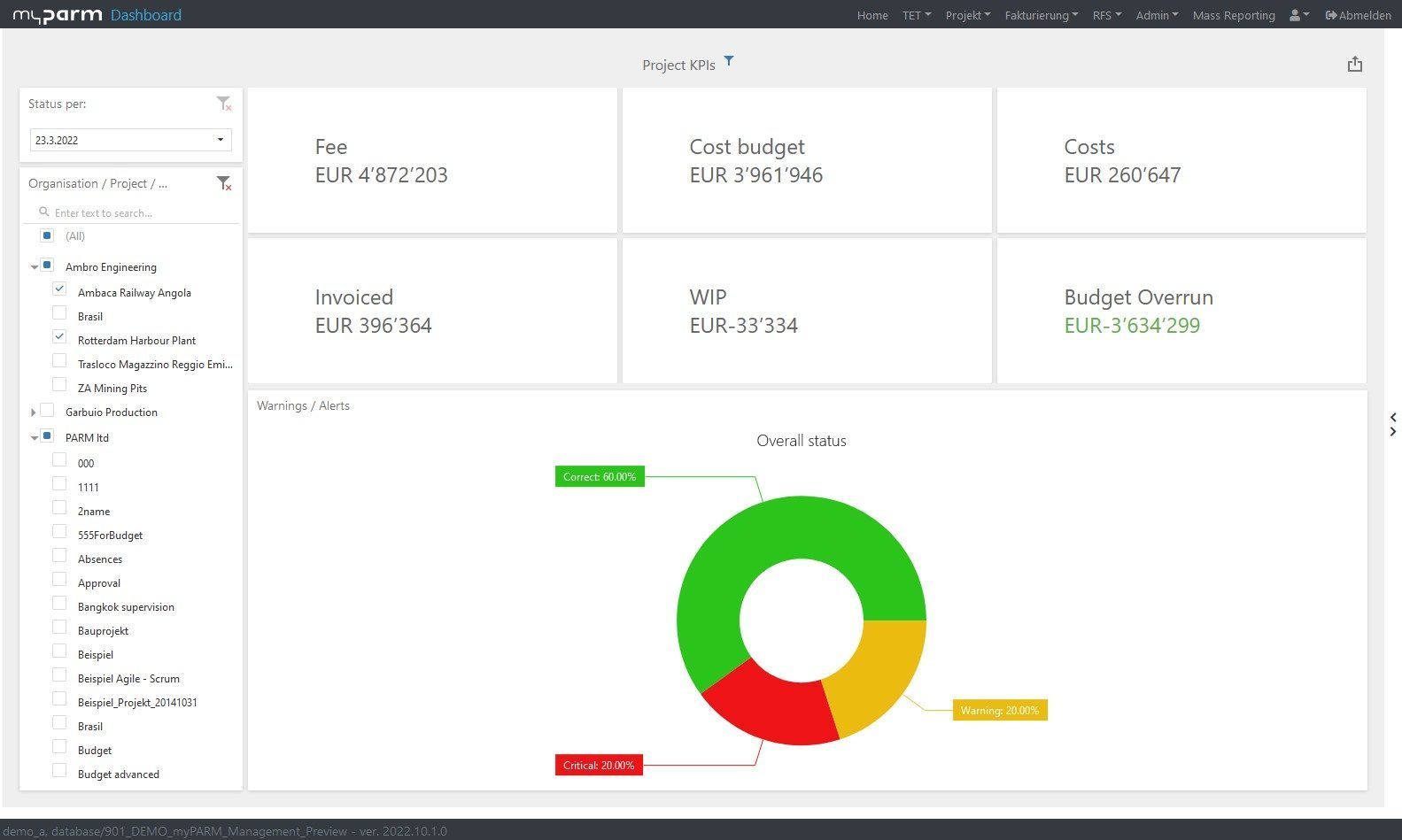
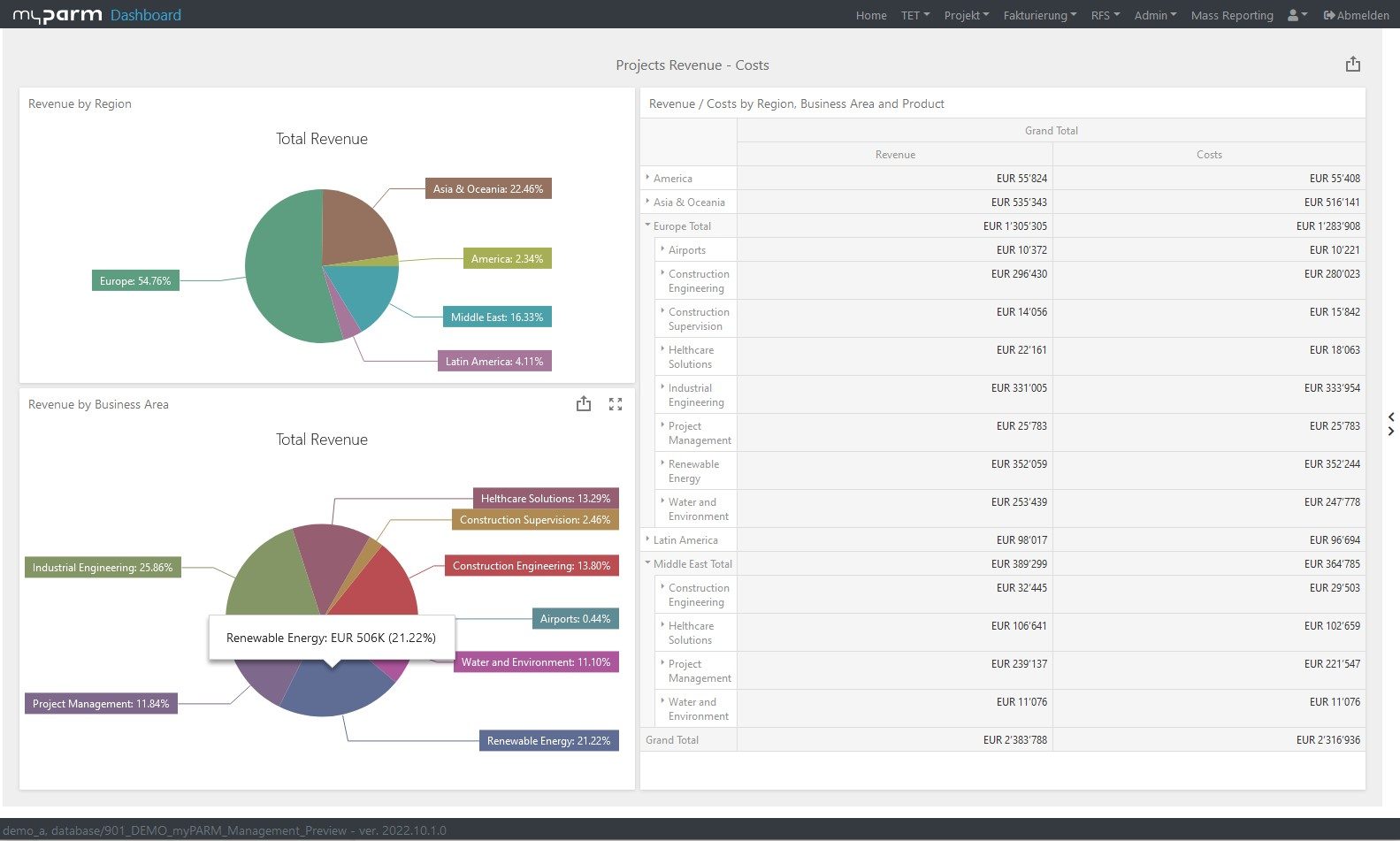
Even though cost overruns aren’t always avoidable, as a project manager, you shouldn’t find yourself in a situation where your budget is already exhausted after only a small portion of the project has been completed—and you’re caught completely off guard. The sooner you realize that the budget is being exceeded, the better you can take action. That’s why constant, real-time monitoring of your projects is essential. You can do this particularly easily with dashboards in your project management software that are tailored to your needs—allowing you to monitor key project metrics—as well as an early-warning system that automatically notifies you when thresholds you’ve defined are exceeded. This allows you to intervene early on if a budget overrun becomes apparent. In addition, effective reporting helps you communicate with your stakeholders and creates the necessary transparency.
More about the project management software myPARM:
Would you like to get to know myPARM in a demo? Then make an appointment with us right away!